Hydraulic Systems in Heavy Equipment: How They Improve Control and Safety
- March 13, 2026
- by
- bhavik@bcreative.in
Walk up to any heavy machine — a port crane, a wind turbine, a material handling unit, and one thing is common. It does not move by simple mechanical force. It moves with the help of hydraulic systems.
And without hydraulic systems, most heavy equipment would simply not work the way it does today.
Hydraulics are used because heavy loads need controlled power. You cannot lift tons of weight smoothly using basic mechanical parts. You need controlled pressure. And that’s exactly what hydraulic systems provide.
What Is an Industrial Hydraulic System in Heavy Equipment?
A hydraulic system generates, regulates, and transmits force through pressurized fluid. Oil moves through pipes driven by a pump. That pressurized oil acts on cylinders or actuators — and the machine responds: an arm lifts, a brake clamps, a load holds steady.
The key components inside any hydraulic system include:
- A hydraulic pump (the source of pressure)
- Control valves (which direct and regulate oil flow)
- Cylinders or rotary actuators (which convert pressure into movement)
- Hydraulic oil and a sealed network of hoses and pipes
- A reservoir and filtration system to keep oil clean and temperature-controlled
When an operator shifts a lever, the oil flow changes — and the machine reacts immediately and proportionally. That’s the power of hydraulics.
Types of Hydraulic Systems — What Emco Precima Offers
At Emco Precima, hydraulic systems are engineered for demanding industrial environments. The range includes:
- Open-Loop Hydraulic Systems: Fluid flows in one direction from the reservoir through the system. Simple, dependable, and widely used in most industrial machinery and braking applications.
- Closed-Loop Hydraulic Systems: Fluid circulates continuously, enabling precise control and high efficiency. Ideal for applications requiring exact positioning and consistent performance.
- Hydrostatic Systems: Deliver smooth, variable speed control — commonly used in heavy-duty material handling equipment and crane operations.
- Hydrodynamic Systems: Transfer energy through fluid motion, well-suited for braking and cooling functions in high-load environments.
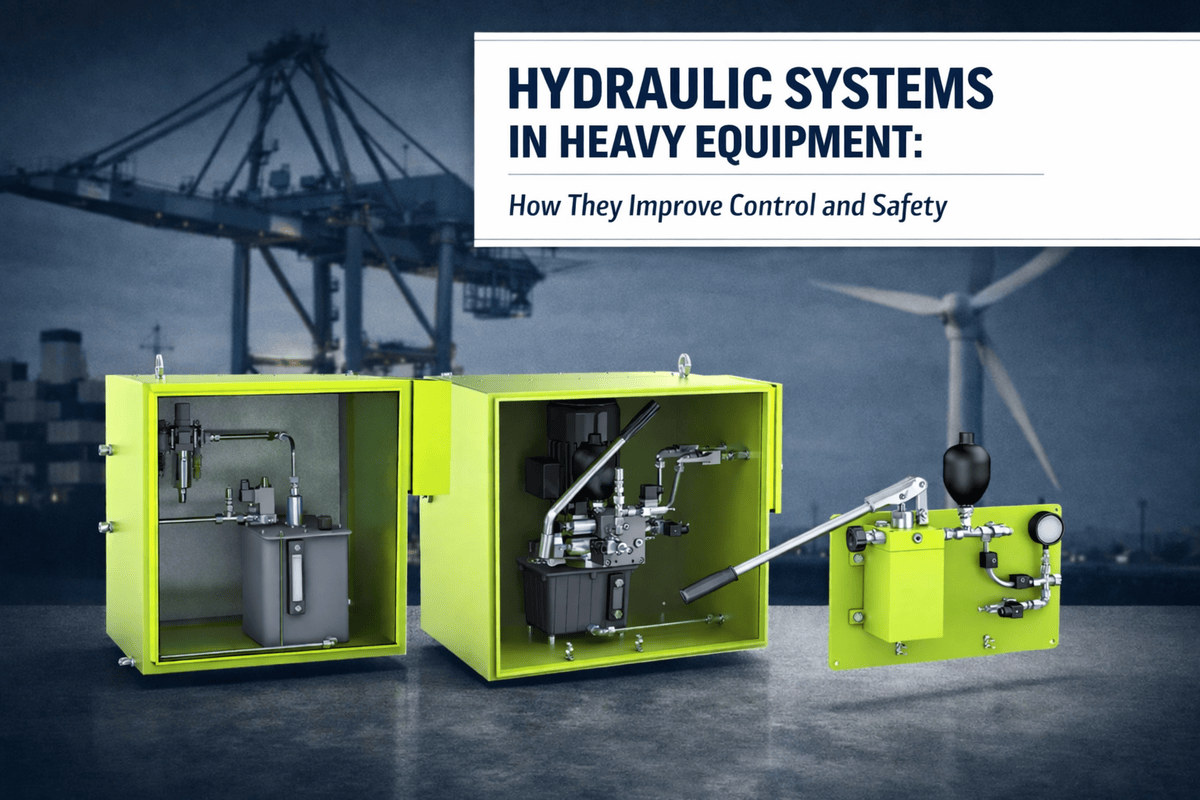
Beyond system types, Emco Precima’s hydraulic product range includes Compactus HPU (Hydraulic Power Units), DH HPU, Hand Pumps, Hydraulic Rotary Actuators, and Anti-Sway Systems — each designed for specific industrial demands.
Where These Systems Are Used
Emco Precima’s hydraulic systems support operations across industries where reliability cannot be compromised:
- Port and overhead cranes requiring precise load control and storm braking
- Wind turbines where yaw and rotor braking must perform in all weather conditions
- Material handling equipment needing consistent hydraulic power for lift and travel braking
- Rail and wheel brake systems requiring instant hydraulic response
- Industrial machinery where motion control and holding force are critical to safe operation
How Hydraulic Systems Improve Control
Heavy machines cannot move randomly. Now you can imagine a crane lifting a load. If there’s only one sudden jerk, the load would swing. And the same thing can happen with a mining cutter. It has to move steadily.
Hydraulics allow slow, controlled movement. The operator can adjust speed and direction smoothly. Pressure can be increased or reduced depending on need. And that helps in doing the job properly.
Take braking systems as an example. Hydraulic pressure spreads the braking force evenly instead of hitting one side hard.
This kind of steady control is why industries look for a dependable industrial hydraulic systems supplier instead of going for cheap parts.
How Hydraulic Systems Improve Safety
Heavy machines handle a lot of weight daily. If control is lost, big accidents can happen.
Hydraulic systems improve safety in several ways, like:
- The load doesn’t fall suddenly
- Relief valves release extra pressure when the system is overloaded
- Emergency braking systems work instantly through hydraulic pressure
- Smooth stopping reduces damage and avoids sudden breakdowns
In places like wind turbines, cranes, and material handling units, hydraulic reliability is directly linked to worker safety. If the system is strong, the machine behaves. If not, risk increases.
That’s why choosing the right hydraulic systems supplier is more important than you think.
Why Quality Hydraulic Systems Matter
In daily life, hydraulic systems work under high pressure. If components are weak, leakage, pressure drop, or sudden failure is sure to happen.
In heavy equipment, failure means downtime. And downtime means money loss.
A trusted industrial hydraulic systems supplier in India designs systems that handle real working conditions. Like heat, load, vibration, and continuous usage.
At Emco Precima Engineering Private Limited, hydraulic systems are built to support industrial disc and drum brake systems used in demanding environments.
Final Thoughts
Hydraulic systems are not just power systems. But they are control systems. They make heavy machines move smoothly and stop safely. From lifting massive loads to applying precise braking force, hydraulics make modern heavy equipment possible.
And when it comes to choosing the right industrial hydraulic systems supplier, you need to check reliability, design strength, and long-term performance. Because in heavy machinery, control is everything.
Explore Emco Precima’s full range of hydraulic systems — including HPU units, Anti Sway Systems, and Hydraulic Rotary Actuators — at https://www.emcoprecima.com/


